Bizarre Facts
FLOATING GOLD
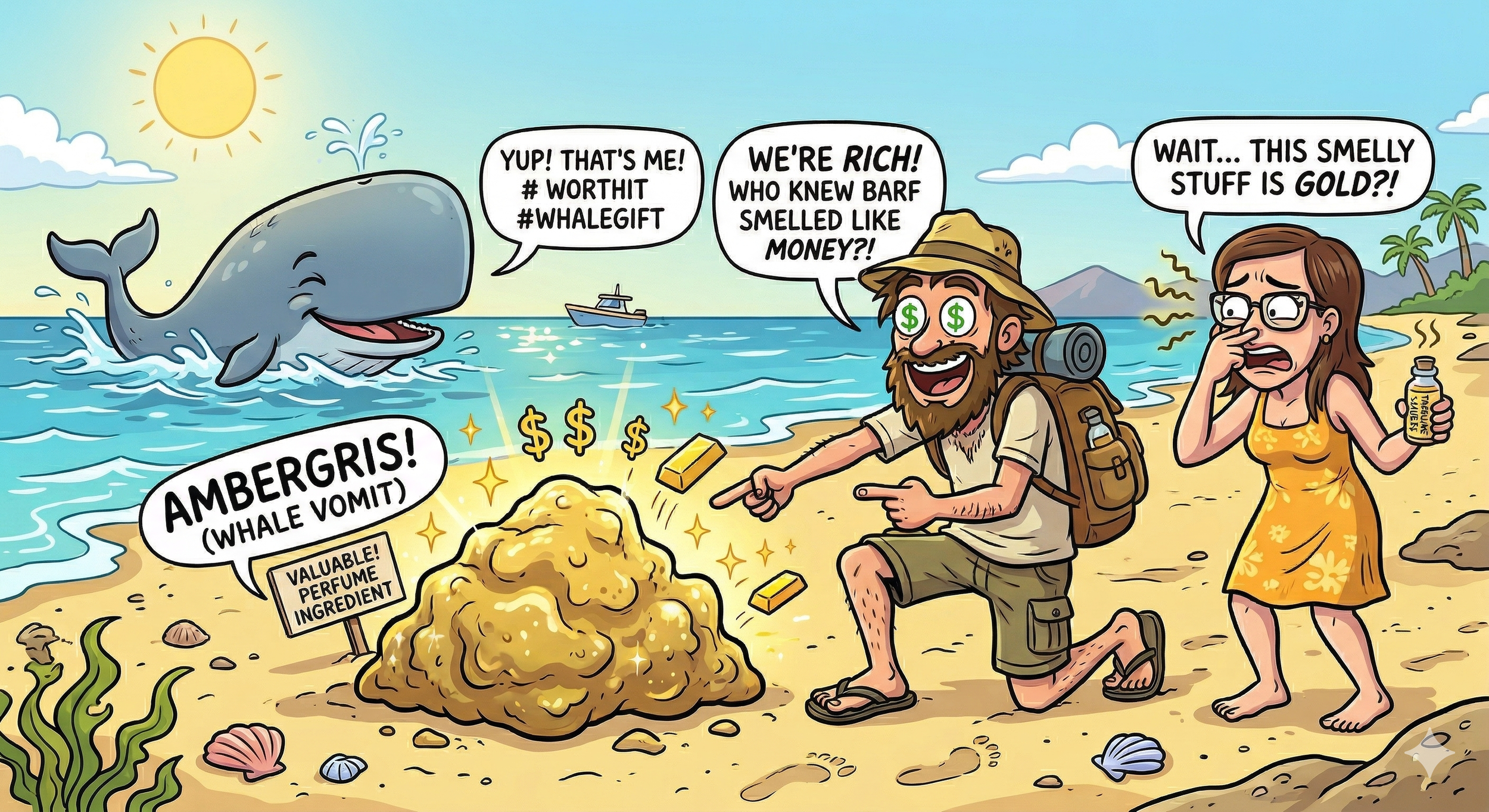
Whale vomit
One of the most expensive and highly prized perfume ingredients in history is ambergris. It is essentially a waxy substance produced in the digestive system of sperm whales to coat squid beaks, which is then expelled and floats in the ocean curing under the sun and salt for years. When it washes ashore, it looks like a strange rock, but it gives perfumes a rich, earthy, and incredibly long-lasting base.

-
Description text goes here
THE BEAVER’S “VANILLA”
Castoreum
For centuries, high-end perfumers used castoreum to give fragrances a rich, leathery, and subtly vanilla-like scent. The catch? Castoreum is a yellowish secretion extracted from the castor sacs of beavers, located right next to their anal glands.
-
Fenaroli's Handbook of Flavor Ingredients lists castoreum extract historically used in perfumes and food. National Geographic has also published several articles verifying the historical use of beaver castor sac secretions in luxury perfumery and 20th-century vanilla/raspberry flavorings.
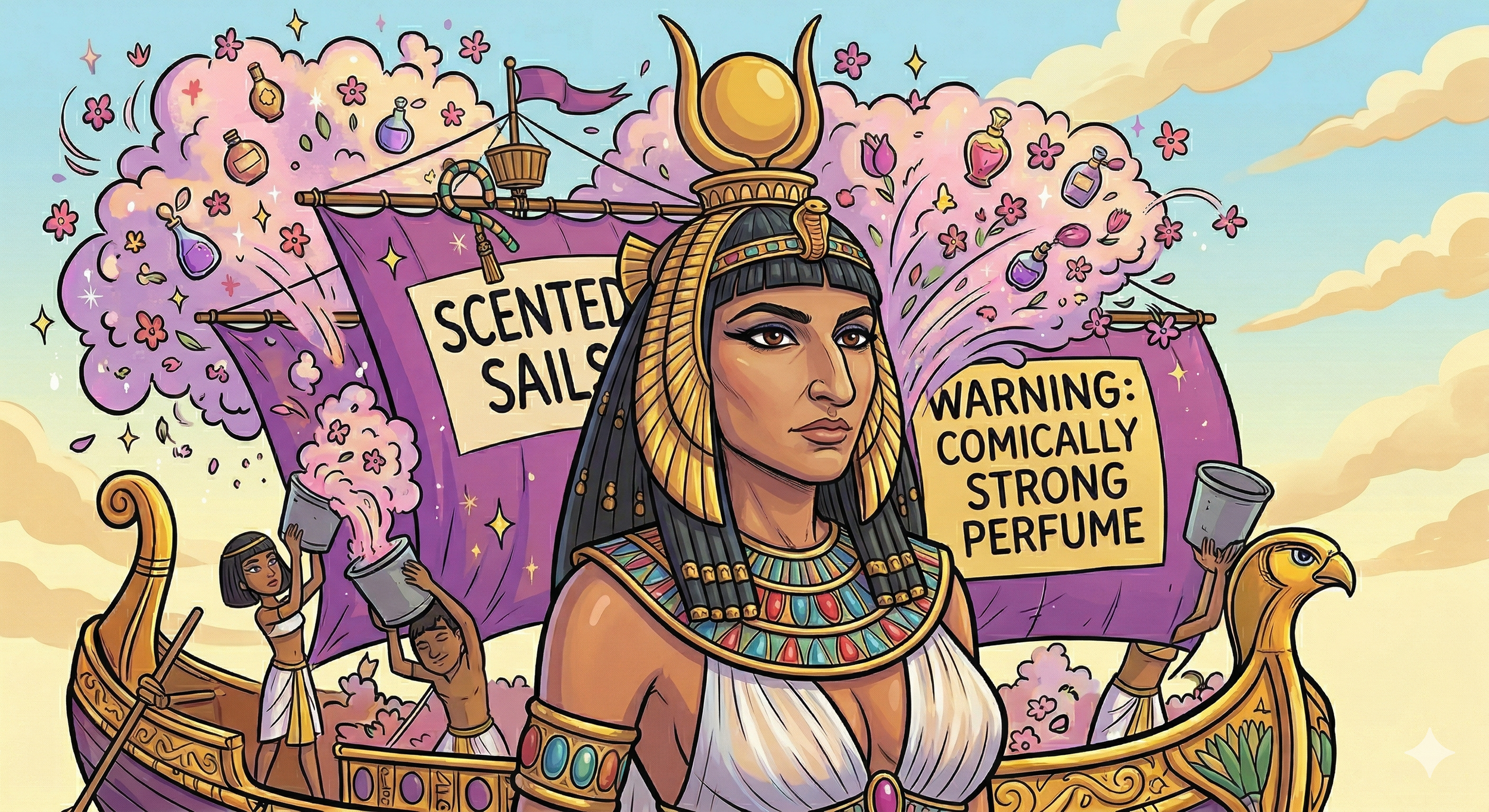
Cleopatra was a master of botanical seduction. When she sailed to meet Mark Antony, she reportedly drenched the sails of her massive ship in so much precious rose and lotus perfume that the wind carried her scent to the shores of the city long before her ship was even visible on the horizon.
CLEOPATRA’S SCENTED SAILS
-
The Greek historian Plutarch wrote about this exact moment in his work Life of Antony. He described her royal barge having "sails of purple" and noted that "odours of wondrous nature from the countless incense-offerings were wafted along the river-banks." Shakespeare later immortalized this exact scene in his play Antony and Cleopatra.
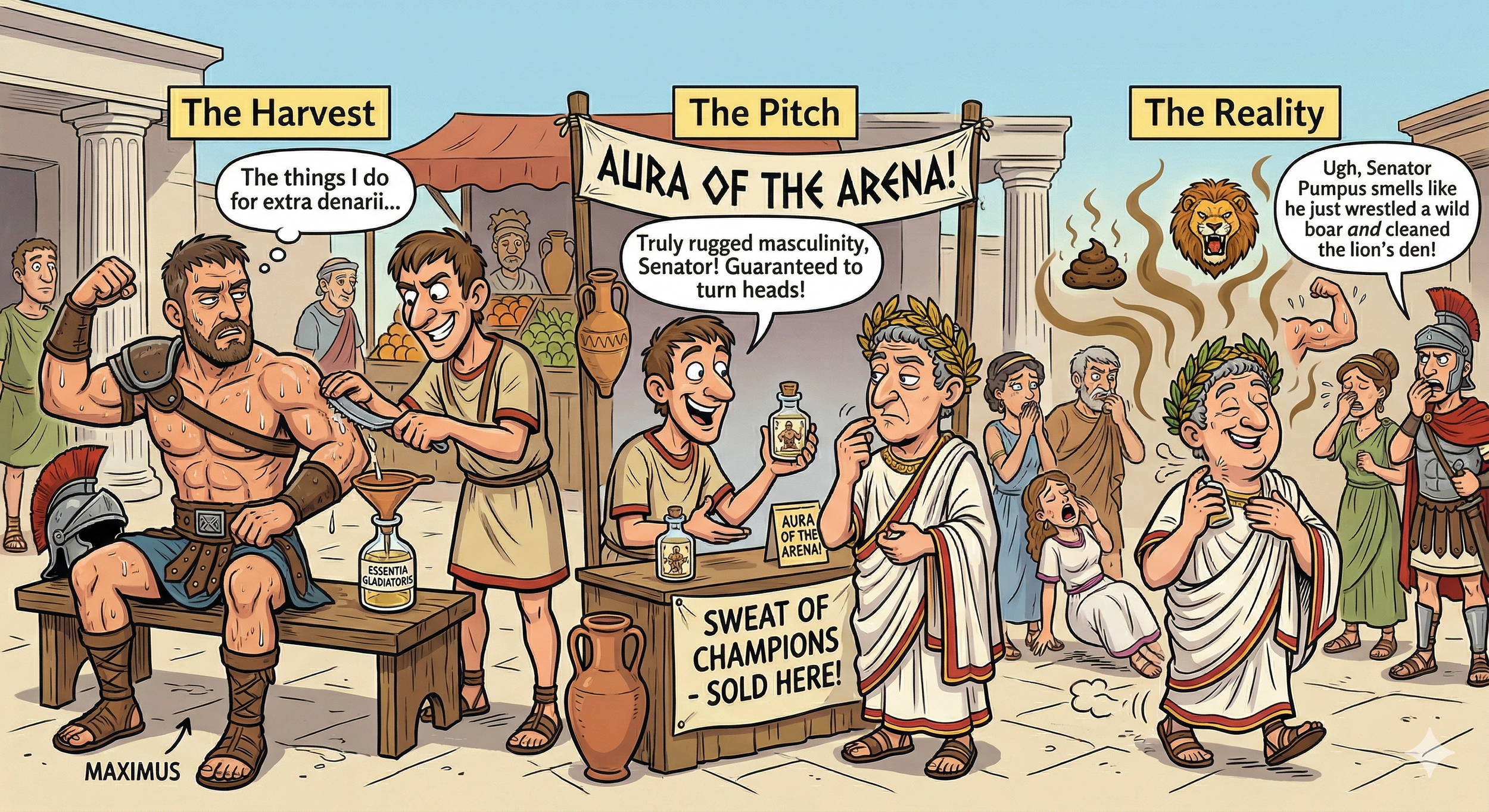
GLADIATOR SWEAT AS COLOGNE
In Ancient Rome, the sweat, dirt, and olive oil scraped off the bodies of victorious gladiators with a curved tool called a strigil were collected into vials. It was sold at a premium to wealthy women who wore it as a perfume and aphrodisiac.
-
The Roman author and naturalist Pliny the Elder wrote about this in his encyclopedic work Natural History. The mixture of sweat, dead skin, and olive oil scraped off with a tool called a strigil was bottled and sold as gloios.
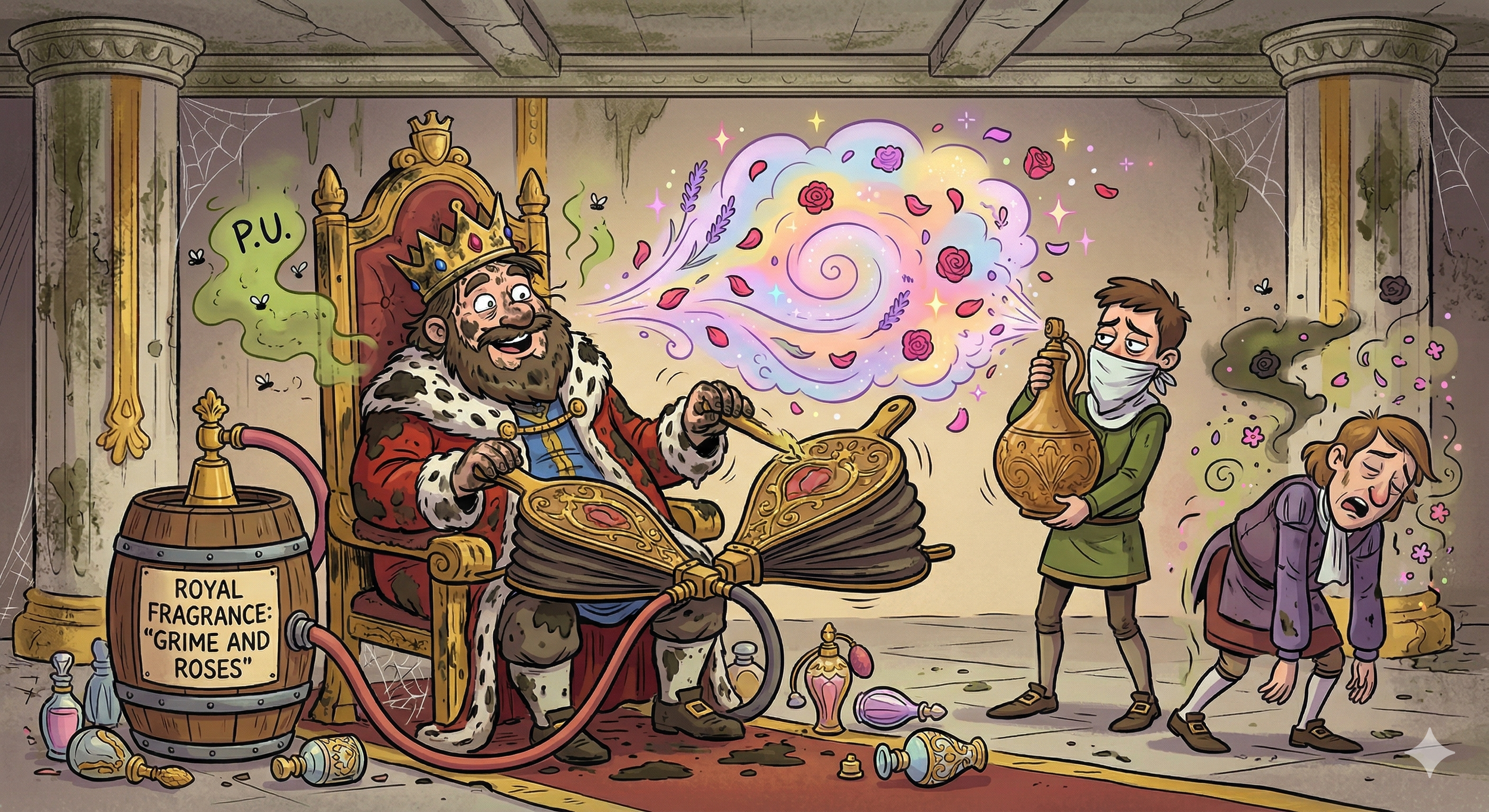
The Sweet-Smelling (But Unwashed) King
King Louis XIV of France, known as the Sun King, was terrified of bathing because it was believed hot water opened the pores to disease. He supposedly only took three baths in his entire life. To cover the smell, he was an absolute fanatic about fragrance. He had his shirts rinsed in a perfume called Aqua Angelica, demanded his courtiers wear a different scent every single day, and even had the fountains at the Palace of Versailles heavily scented with rose and orange blossom.
-
Historian Joan DeJean’s book The Essence of Style: How the French Invented High Fashion, Fine Food, Chic Cafes, Style, Aesthetics, and Glamour covers Louis XIV’s absolute obsession with heavy perfumery at Versailles to mask the severe lack of bathing and plumbing.
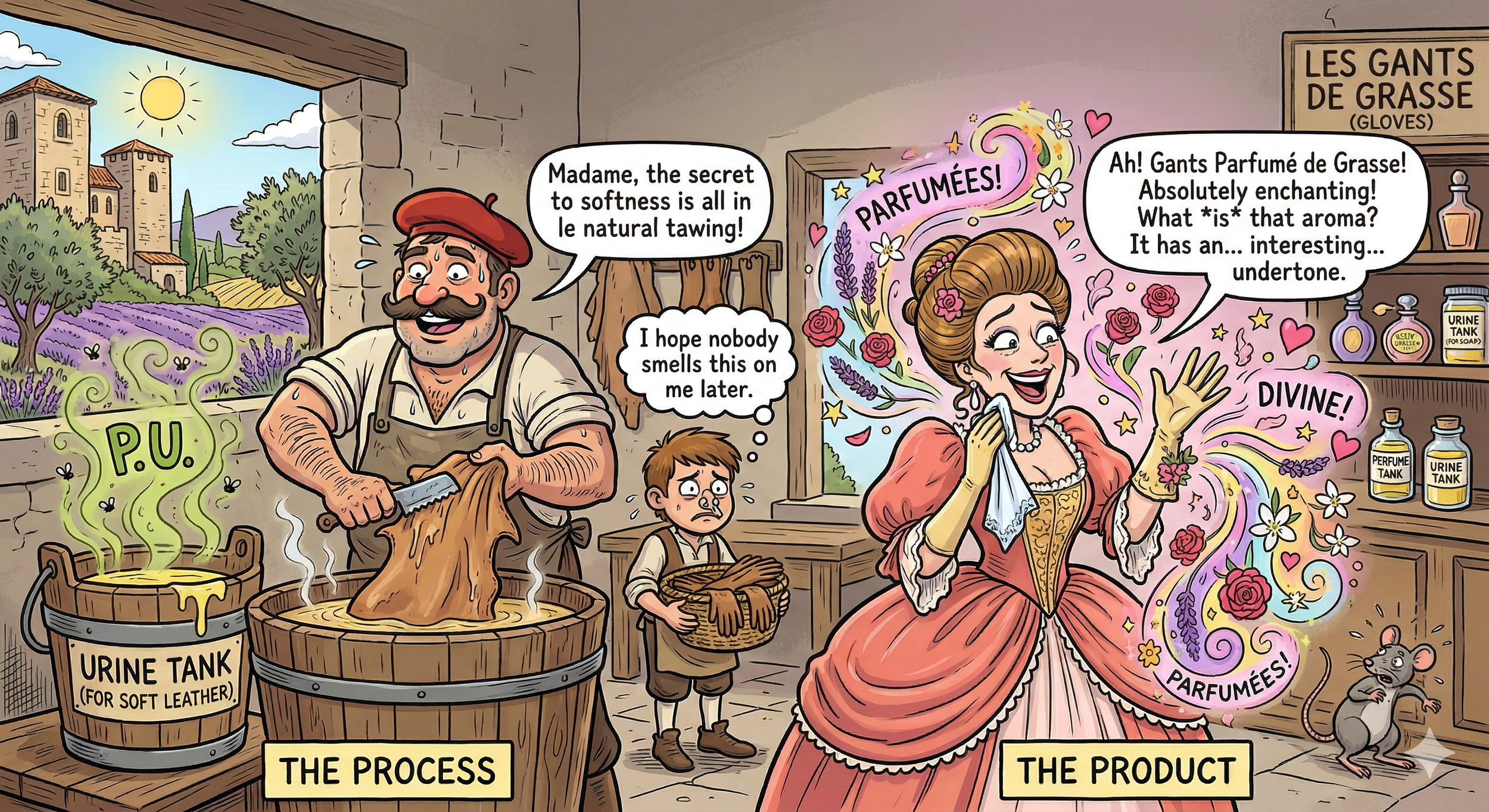
Perfumed Gloves and Urine
The golden age of French perfumery in Grasse actually started as a cover-up. In the 16th century, leather gloves were the ultimate fashion statement, but the tanning process used animal urine and feces, leaving the gloves smelling putrid. Glove-makers began heavily infusing the leather with musk, ambergris, and local botanicals like jasmine to mask the stench, accidentally giving birth to the modern perfume industry.
-
Perfume: Joy, Obsession, Scandal, Sin by Richard Stamelman details how Grasse transitioned from a foul-smelling leather tanning town to the perfume capital of the world. Catherine de' Medici's personal perfumer, René le Florentin, is historically credited with popularizing the trend of heavily scenting these urine-tanned gloves with sweet botanicals in the 16th century.